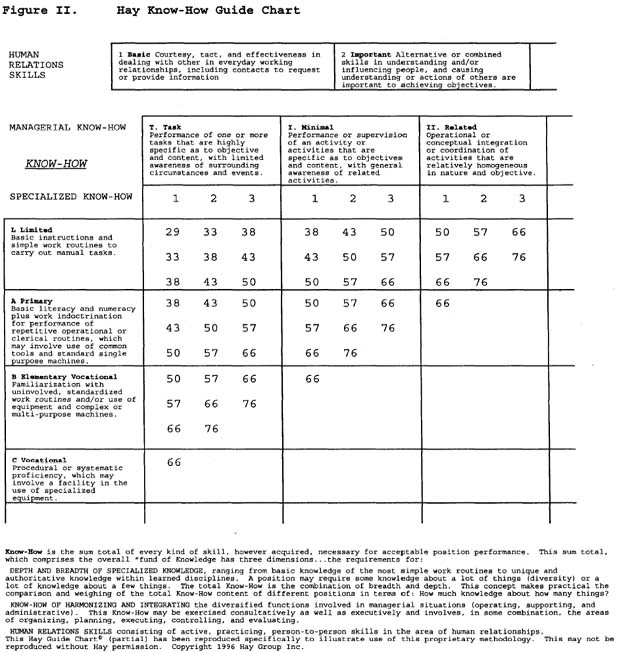
Hay Management Guide Chart
Disclaimer
The Hay Job Evaluation Methodology is a proprietary methodology. You would need permission from the owner of this tool to use it. I document it here for human resource practitioners who for various reasons wanted to know how it works (education purposes).
What is Problem Solving?
Problem solving refers to “self-initiated” thinking required for the job toanalyze, to evaluate, to create, to reason, to arrive at and make conclusions.
Home Forages Forage Species Tennessee Forage Guide. In order to make this decision, it is essential to know the ways that forages are classified. Each forage species is distinguished as being a grass or a legume, an annual or a perennial, and a warm-season or a cool-season plant. Records Management & Admin Coord GRADE HAY 07 POINT BAND 236-267 Hydro CF(L) Co. Salary Range Top of Document $52,900 - $66,100 Client Support Analyst Computer Supp ort Specialist Executive Assistant Regulatory Coordinator Treasury Assistant $61,850 - $77,300 Executive Assistant GRADE HAY 08.
Problem solving measures the requirement to use know-how conceptually and analytically. It is circumscribed by standards, covered by precedents or referred to others.
The Dimensions of the Hay Problem Solving Profile Chart
There are 2 dimensions displayed in the Hay Problem Solving Profile Chart. The points from each of these dimensions are added to form the total points for Problem Solving factor.
The first dimension is Thinking Environment, that is the environment in which the thinking takes place. It is the degree to which thinking constrained by rules, methods, procedures, policy, strategy and so on. This dimension is also known as the Freedom to Think. The second dimension is Thinking Challenge, that is the challenge presented by the thinking to be done. This refer to the complexity of the problem encountered, and the extent to which original thinking must be applied to arrive at solutions.This appears as a vertical column at the left of the Chart.
| Levels | Short Description | Long Description | |
| A | Strict Routine / Highly Structured | Simple rules and detailed instructions. | Thinking within detailed rules, and/or instructions and/or rigid supervision (by a person or system). Action steps are defined. |
| B | Routine | Established routines and standing instructions. | Thinking within standard instructions and/or continuous close supervision (by a person or system). Most action steps are defined. |
| C | Semi-Routine | Somewhat diversified procedures and precedents. | Thinking within well-defined procedures and precedents somewhat diversified, and/or regular supervision. Detailed action is not defined only the approach |
| D | Standardized | Substantially diversified procedures and specialized standards. | Thinking within substantially diversified, established procedures and standards, and general supervision. Most problems or cases can be tackled based on experience, but the most complex will mean getting advice |
| E | Clearly Defined | Clearly defined policies and principles of a discipline. | Thinking within clearly defined policies, principles and specific objectives, under readily available direction from senior management |
| F | Broadly Defined | Broad policies and specific objectives. | Thinking within broad functional policies and objectives, under general direction only |
| G | Generally Defined | General policies and ultimate goals. | Thinking within general policies, principles and goals, under guidance. |
| F | Abstractly Defined | General laws of nature or science, within a framework of cultural standards and business philosophy. | Thinking within business philosophy and/or principles controlling human affairs. |
Source: (a) Leicestershire County Council (b) Armenian HR Association
Another way to understand the Thinking Environment is to break the description into the following table.
Source: Hay Group
The second dimension is Thinking Challenge. This appears as a horizontal table across the top of the chart.
| Levels | Description | |
| 1 | Repetitive | Identical situations requiring solution by simple choice of learned things. |
| 2 | Patterned | Similar situations requiring solution by discriminating choice of things learned. |
| 3 | Interpolative | Differing situations requiring the identification and selection of solutions through the application of acquired knowledge. |
| 4 | Adaptive | Situations requiring analytical, interpretative and/or constructive thinking and a significant degree of evaluative judgement |
| 5 | Creative | Pathfinding situations requiring creative thinking, the development of new concepts and approaches contributing significantly to the advancement of knowledge and thought |
Source: (a) Leicestershire County Council (b) Armenian HR Association
Source: Hay Group
Here is the Hay Problem Scoring Guide Chart without the percentage utilization of Know-How in problem solving.
| Thinking Challenge | |||||
| Thinking Environment | 1 | 2 | 3 | 4 | 5 |
| A | |||||
| B | |||||
| C | |||||
| D | |||||
| E | |||||
| F | |||||
| G | |||||
| H | |||||
Here is the same Chart showing part of the percentage utilization of of Know-How in problem solving. Step 1, we determine the Thinking Environment to be D and the Thinking Challenge to be 33 percent. This is the %PS.
| Thinking Challenge | |||||
| Thinking Environment | 1 | 2 | 3 | 4 | 5 |
| A | 10% 12% | 14% 16% | 19% 22% | 25% 29% | 33% 38% |
| B | 12% 14% | 16% 19% | 22% 25% | 29% 33% | 38% 43% |
| C | 14% 16% | 19% 22% | 25% 29% | 33% 38% | 43% 50% |
| D | 16% 19% | 22% 25% | 29% 33% | 38% 43% | 50% 57% |
| E | 19% 22% | 25% 29% | 33% 38% | 43% 50% | 57% 66% In a week it received revenue of over US $500 million worldwide. Metacritic awarded GTA 4 Free Download For Pc Highly Compressed a score of 98/100. It wins Game of The Year awards from Spike Tv, Giant Bomb, Kotaku and Game Trailers.GTA 4 Pc Game Free Download Highly Compressed sold 3.6 million copies during its first 24 hours. Gta 4 ultra compressed download for pc. While IGN Awarded points to GTA 4 Free Download Android APK is 10/10.Grand Theft Auto IV Free Download For Pc Highly Compressed Game received many game awards. |
| F | 22% 25% | 29% 33% | 38% 43% | ||
| G | 25% 29% | 33% 38% | |||
| H | 29% 33% | ||||
Problem solving (PS) measures the intensity of the mental process that employs Know How to identify, define and solve a problem. Hence problem solving is treated as a percentage utilization of Know How in the mental process of solving problems. To find the problem solving scores or points, we need to refer to another table with the PS percentage in a vertical column on the left and the Know How scores or points in a horizontal row at the top of the table.
| KH Points | |||||||||||||
| % PS | 50 | 57 | 66 | 76 | 87 | 100 | 115 | 132 | 152 | 175 | 200 | 230 | 264 |
| 87% | 43 | 50 | 57 | 66 | 76 | 87 | 100 | 115 | 132 | 152 | 175 | 200 | 230 |
| 76% | 38 | 43 | 50 | 57 | 66 | 76 | 87 | 100 | 115 | 132 | 152 | 175 | 200 |
| 66% | 33 | 38 | 43 | 50 | 57 | 66 | 76 | 87 | 100 | 115 | 132 | 152 | 175 |
| 57% | 29 | 33 | 38 | 43 | 50 | 57 | 66 | 76 | 87 | 100 | 115 | 132 | 152 |
| 50% | 25 | 29 | 33 | 38 | 43 | 50 | 57 | 66 | 76 | 87 | 100 | 115 | 132 |
| 43% | 22 | 25 | 29 | 33 | 38 | 43 | 50 | 57 | 66 | 76 | 87 | 100 | 115 |
| 38% | 19 | 22 | 25 | 29 | 33 | 38 | 43 | 50 | 57 | 66 | 76 | 87 | 100 |
| 33% | 16 | 19 | 22 | 25 | 29 | 33 | 38 | 43 | 50 | 57 | 66 | 76 | 87 |
| 29% | 14 | 16 | 19 | 22 | 25 | 29 | 33 | 38 | 43 | 50 | 57 | 66 | 76 |
| 25% | 12 | 14 | 16 | 19 | 22 | 25 | 29 | 33 | 38 | 43 | 50 | 57 | 66 |
| 22% | 10 | 12 | 14 | 16 | 19 | 22 | 25 | 29 | 33 | 38 | 43 | 50 | 57 |
| 19% | 9 | 10 | 12 | 14 | 16 | 19 | 22 | 25 | 29 | 33 | 38 | 43 | 50 |
| 16% | 8 | 9 | 10 | 12 | 14 | 16 | 19 | 22 | 25 | 29 | 33 | 38 | 43 |
| 14% | 7 | 8 | 9 | 10 | 12 | 14 | 16 | 19 | 22 | 25 | 29 | 33 | 38 |
| 12% | 6 | 7 | 8 | 9 | 10 | 12 | 14 | 16 | 19 | 22 | 25 | 29 | 33 |
| 10% | 5 | 6 | 7 | 8 | 9 | 10 | 12 | 14 | 16 | 19 | 22 | 25 | 29 |
Let us say that the score that we had obtained from the Hay Know How Guide Chart is 264. This is the KH Points. When we looked at the cross section of 264 KH Points and 33%PS, we determined the score for Problem Solving to be 87.
Selecting the appropriate forage for hay, pasture, and/or conservation use is an important decision facing producers. There is a wide range of grasses and legumes available, and each species has its own particular plant and seed characteristics, making it more or less suitable for a producer's purpose. Thus, this decision is as critical as selecting the best variety within a forage species itself and should be given equal attention.
Many factors have to be taken into account when making a forage selection. One of the foremost is the necessity of matching forage species to the characteristics of the soil to be sown, characteristics such as drainage, fertility, and pH. County soil survey books describe the limitations of a particular soil for agricultural production, and this information is helpful, especially with land the producer has not previously farmed. Crop use and managerial capability are also among the factors that will influence the final decision.
The purpose of this publication is to simplify the process of forage selection for the producer by collecting all of the relevant information and presenting it in one place and in convenient form. The relative advantages of pure stands and mixtures are discussed, as well as the processes of selecting the right grasses, legumes, and mixtures. A particularly helpful feature is a series of tables enabling the producer to quickly and accurately assess various forage species' potential suitability and usefulness. Simple instructions for using these tables are also included.
Pure Stands or Mixtures
One of the first decisions that should be made before selecting the forage crop to be sown is whether a pure stand of one forage or a mixture of two or more forages is desired.
A pure grass stand or a pure legume stand can be advantageous over a grass-legume mixture for the following reasons:
- Eases the management associated with trying to keep all species in a mixture competitive.
- Increases the number of herbicides that can be used for weed control. Weed control options are more limited with a grass-legume mixture.
- Improves forage quality. A pure legume stand is usually higher in forage quality than a pure grass stand or a grass-legume mixture.
A mixture of a grass and a legume can be advantageous over a pure grass or legume stand for the following reasons:
- Eliminates the need for nitrogen fertilizer on pure grass stands because the legume in the mixture will provide nitrogen for grass growth.
- Lengthens the life of the pasture or hayland because the grass will remain after the legume stand is reduced. If desired, a legume can be reintroduced by pasture renovation (see Purdue Extension publication ID-167, 'Maximizing the Value of Pasture for Horses,')
- Reduces the problem of legumes 'heaving.' This is the process in which legumes are raised from the soil surface by freeze-thaw action in the late winter and early spring, resulting in plant damage. The grasses hold the legume plants in place better than a pure legume stand can hold itself.
- Reduces soil erosion on steep slopes. Grasses have a more massive root system and are better for soil conservation purposes than pure legume stands.
- Improves livestock performance. A grass-legume mixture can improve animal gain and cattle breeding performance over a pure grass stand, especially when the grass is endophytic-fungus infected tall fescue. The mixture can also reduce animal performance problems associated with grass tetany and fescue toxicosis (see Purdue Extension publication AY-258, 'Minimizing Tall Fescue Toxicity').
Generally, there is no advantage with a 'shotgun mixture,' a mixture of many grasses and legumes. These mixtures, usually prepackaged, do not give the producer the opportunity to match the specific grasses and legumes to the soil types on his farm. In time, two or three predominant forage species survive because of soil type, cutting management, and/or the fertilization program. This small number of forage species in the established stand is far less than the six or more forage species that were in the 'shotgun mixture.'